Inside the enduring New York City urban legend of Cropsey

The urban legend of axe-wielding serial killer Cropsey began at New York summer camps -Credit:Reach Publishing Services Limited (Reach Publishing Services Limited)
The legend of Cropsey, a purported serial killer who gained a reputation at New York state summer camps, begins in a familiar way: An esteemed member of the community faces a tragic familial loss at the hands of campers and enacts his revenge through a slew of bloody murders. Cropsey’s children, and sometimes wife, are often killed by fire, whether it be a campfire grown out of control or a cookout gone wrong.
After losing his family, the “Cropsey Maniac” takes up a weapon, most often depicted as an axe, and begins a bloody reign of terror at a summer camp. It starts with a lone camper’s body found stabbed or chopped up in the woods and expands into a series of killings. In some renditions of the tale, Cropsey enters an altercation with a camp counselor, who manages to chop at Cropsey’s leg as he flees, causing the killer to leave a bloody trail in the woods. Sometimes, the forest is then burned down. Cropsey’s body is never found.
“Cropsey is an authentic modern legend,” said Greg Young, host of The Bowery Boys podcast, comparing the myth to a character like Paul Buyan.
• Halloweentown celebrates 28 years as fans push for a reunion of the Disney Channel franchise
• Psychic and pet medium reveals what she’s learned about the unexplained ahead of Halloween
“It spread very organically,” he continued, attributing Cropsey’s origins to New York summer camps in the post-war era. The children attending these summer camps would bring the tale of Cropsey home, spreading the urban legend throughout New York City.
“It’s a very simple idea, but you have to keep in mind that back in the mid-20th century, they didn’t have horror in quite the same way,” said Young, who sees Cropsey as a precursor to iconic slasher movie characters like Jason Voorhees and Michael Myers.
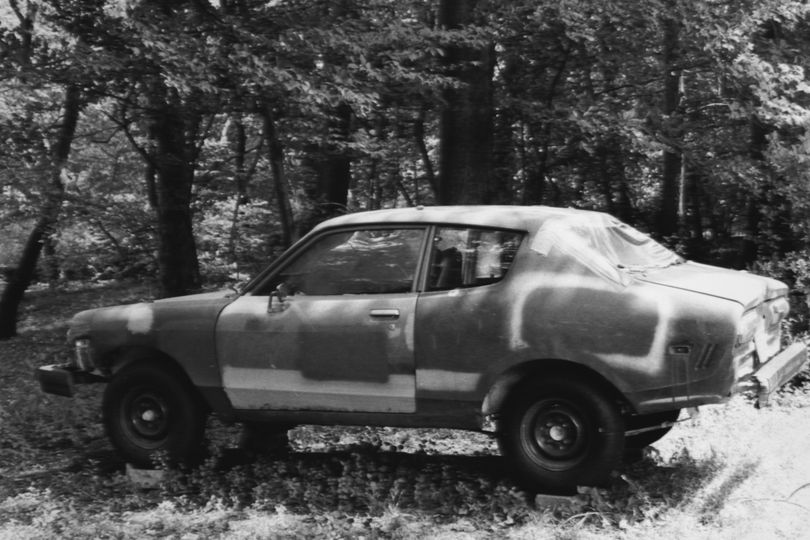
The fictional stories of Cropsey can 'attach themselves to a local legend'
Cropsey’s start as a campfire story served as a way to keep kids both entertained and in line. With a serial killer on the loose outside, a camper may be more inclined to stay in their bed in the safety of a cabin.
Young added that the story is often tied to real-life crime stories.
“Sometimes, they'll link a crime story to this legend of this killer, who often has a hook for a hand,” he explained, adding that the myth often changes based on region.
The fictional stories of Cropsey then “attach themselves to a local legend.”
In Staten Island, Cropsey did just that.
Josh Zeman, who directed the 2009 documentary “Cropsey” along with fellow Staten Island native Barbara Brancaccio, tied the legend of Cropsey to a string of real life murders and disappearances in the borough during the 1970s and 1980s.
He attributes the start of Cropsey to the story of “the Cropsey Maniac,” who came from “upstate New York in the 1940s and 50s.”
When asked if Cropsey fits the common urban legend of the “killer with a hook for a hand,” Zeman described him as “more of an axe-wielding guy.”
“It was used as a cautionary tale to keep kids from wandering off into the night and getting lost in the woods,” he said.
In 1977, folklorists Lee Haring and Mark Breslerman catalogued the various versions of the story told by former summer camp counselors and camp-goers in “The Cropsey Maniac.” The accounts revealed that the harrowing Cropsey is always a “respected adult male typifying the values of the older generation from a middle-class adolescent’s point of view.”
“Informants who heard the story in a camp setting localize it near their camp; those who heard it at school localize it near their schools,” wrote Harring and Breslerman.
Cropsey grew into a piece of the city’s history as campers returned from upstate New York to the five boroughs.
“They pulled the camp counselor ‘Cropsey Maniac’ story, and then they attached it to the WIllowbrook story and this real guy, Andre Rand,” said Zeman.
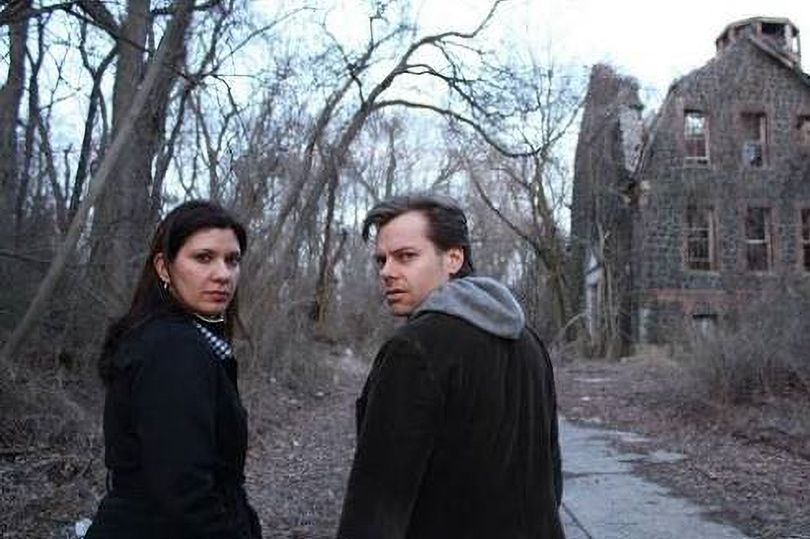
Staten Island natives Josh Zeman and Barbara Brancaccio released a documentary about Cropsey in 2009
In Staten Island, the fictional killer gained ties to the real-life Andre Rand, a convicted child kidnapper, sex offender and suspected serial killer. In the late 1970s and early 1980s, a slew of missing persons were attributed to Rand.
Only two bodies were ever found: Jennifer Schweiger and Shin Lee.
Both corpses were discovered near the Willowbrook State School, a scandal-plagued institution for children with intellectual disabilities. Willowbrook developed a reputation as a dirty, overcrowded and ultimately abusive space for the children who lived there. Rand once worked at the institution as an orderly.
In 978, Lee, a 44-year-old nurse at Willowbrook, was found strangled to death. No concrete evidence linked her death to Rand, but he remained a key suspect in the case.
In 1988, Rand was charged with the 1987 kidnapping and first-degree murder of 12-year-old Schweiger, who was seen with Rand before she went missing. He was convicted on the kidnapping charge, but a jury failed to reach a verdict on the murder charge.
In 2004, he was convicted for the 1981 kidnapping of 7-year-old Holly Ann Hughes.
“In Staten Island, it was the fact that there really were kids going missing,” said Zeman, “So, I think it was the collision of the truth and the fiction, or the fact and the fiction, that kind of made [Cropsey] explode, at least for us in Staten Island."
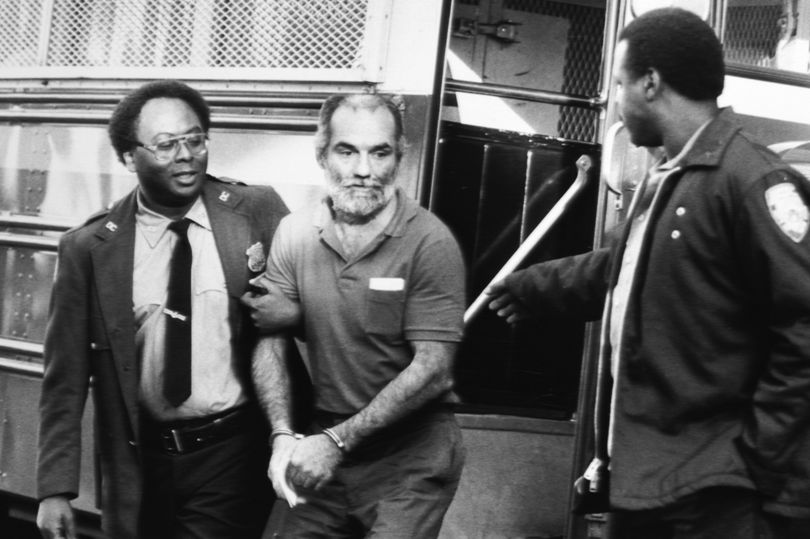
Andre Rand is a real-life convicted kidnapper from Staten Island
Cropsey grew out of Staten Island’s unique position as a space rife with greenery when compared to a borough like Manhattan.
Zeman explained that people who were “used to seeing bad things happen in abandoned lots” approached Staten Island’s woods with worry.
“They were totally freaked out,” he said.
“The interesting thing was [that] you had the Willowbrook mental institution. You really did have bad things in the woods,” Zeman continued, pointing to the abuse, disappearances and murders that occurred near and on the institution’s grounds.
The story of the Cropsey Maniac commingled with Rand’s actual kidnappings and killings, creating a twisted mix of fact-meets-fiction that pushed Cropsey’s transformation from an upstate tale into a haunting piece of Staten Island’s mythology.
Young sees Cropsey as a legend that persists into the modern day.
“Each summer, people go back to school and they spread the story. People love to scare themselves when they're at camps, and sometimes the counselors encourage it because it keeps people slightly more behaved than they would be,” he said.
“You're still a captive audience to that type of story because it's still dark, you're still away from home, you're still a little scared, and you're still a little awkward and you're around a fire,” he continued.
“I think that Cropsey still endures,” Young affirmed.
Source: Crime



0 Comments