These 5 Dog Breeds Are the Most Similar to Cane Corsos, According to Vets
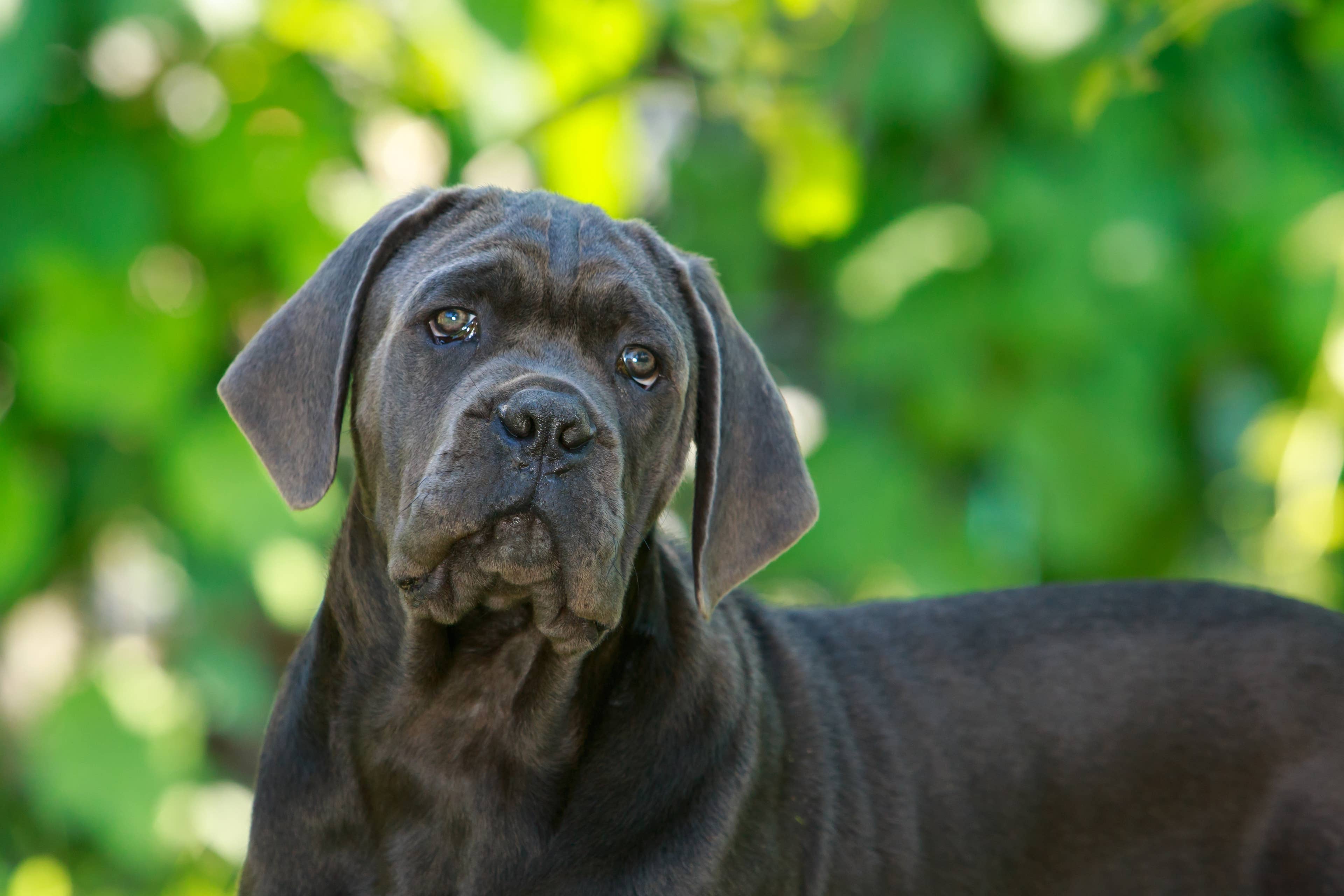
Many Americans had never even heard of the Cane Corso until the late 1980s when the first dogs were brought over from Italy, but that has long changed. The American Kennel Club (AKC) recognized the breed in 2010, and since then it has climbed into the organization’s top 20, and for good reason. Standing 23.5 to 27.5 inches at the shoulder and weighing 88 to 110 pounds, it’s no surprise the Cane Corso is a popular big dog. With their broad skull, heavy jaw, and thick, short coat, Cane Corsos have a very distinctive look, but there are also some dog breeds that are similar to them when it comes to look and personality.
Whether you want a Cane Corso or a dog with a similar build or personality, it’s important to know what you’re signing up for when it comes to a working breed dog. Leah Callaghan, a vet nurse at Butternut Box, says, “Two breeds can look very similar while having quite different energy levels, personalities and training needs. Even within the same breed, every dog is an individual, shaped by genetics, early experiences and the way they are raised.”
🐶SIGN UP to get “pawsitivity” delivered right to your inbox with inspiring & entertaining stories about our furry & feathered friends🐾🐾
Here, we spoke with several animal experts to learn more about the Cane Corso, plus the dog breeds that are most similar to Cane Corsos.
5 Similar Dogs to Cane Corsos
Here are five breeds that share the Cane Corso’s build and working heritage, along with what sets each one apart.
1. Neapolitan Mastiff
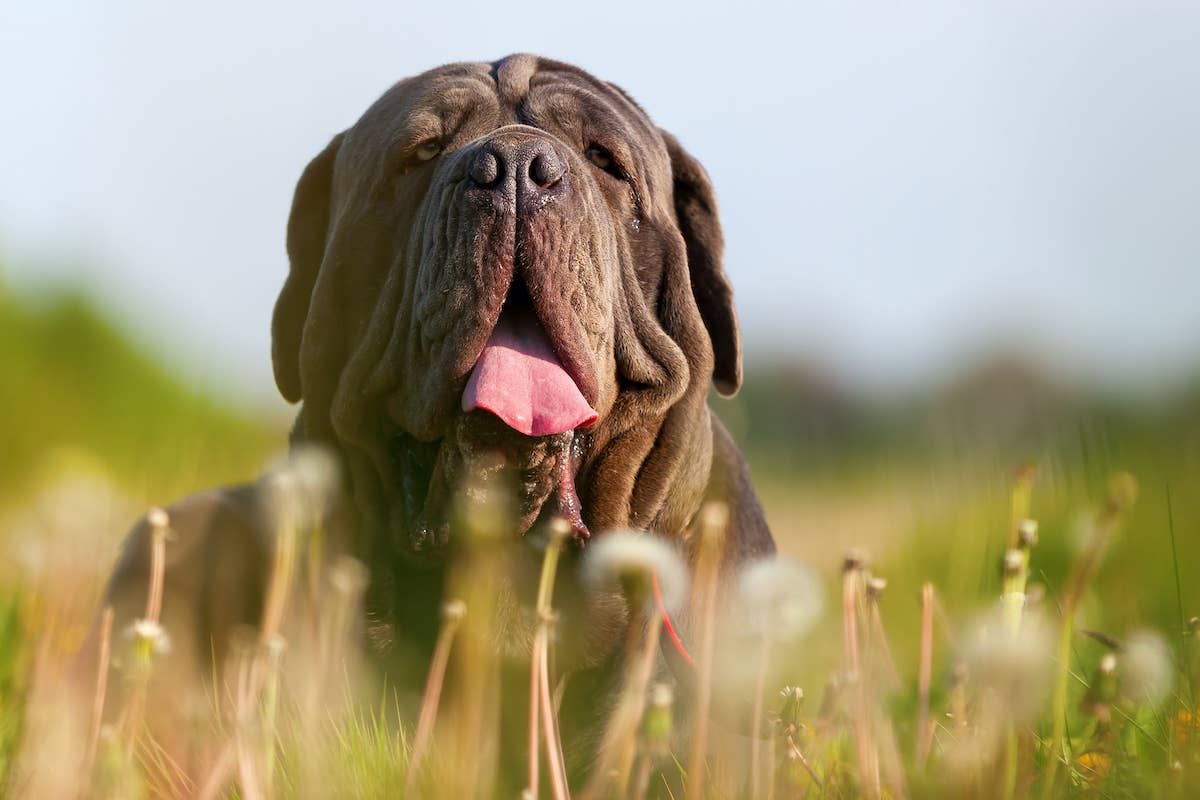
Image via Shutterstock/Christian Mueller
If any breed can claim to be the Cane Corso’s closest relative, it’s the Neapolitan mastiff. Though their original job was the same (guarding property and families), the two breeds went in very different directions.
According to the AKC, breeder Piero Scanziani is largely responsible for the Neapolitan mastiff as we know it today. He started standardizing the breed in the late 1940s after spotting one at an exhibition in Naples, and Italy’s kennel club recognized it in 1949.
“While the Cane Corso was selected to be the athletic, lighter working dog, the Neapolitan mastiff was developed into a massive, heavy, low-activity estate guardian characterized by loose skin, excessive facial wrinkles and heavy dewlaps,” says Dr. Margo Hennet, DVM and senior veterinary genetics manager at Wisdom Panel.
That size difference is easy to see if you observe them side by side. A male Neapolitan mastiff may outweigh a Cane Corso by 40 pounds or more. They look different too, with the Cane Corso looking more athletic, and the Neapolitan mastiff looking more armored. The mastiff typically stands between 24 and 31 inches tall and weighs 110 to 150 pounds.
Loose skin is a defining characteristic of the Neapolitan mastiff, but it also represents a grooming challenge that the Cane Corso doesn’t have.
“Their skin folds need regular cleaning to keep them comfortable and healthy,” Callaghan says. Skip the routine attention, and you risk moisture and debris getting trapped in the wrinkles, resulting in irritation and skinfold dermatitis. Dr. Hennet notes that the Neapolitan mastiff is more prone to this condition than the Cane Corso or most other mastiff types simply because it has more wrinkles, so that’s something to keep in mind if you’re looking into a mastiff for your home.
Related: 6 Dog Breeds Similar to Dobermans, According to Vets
2. Bullmastiff
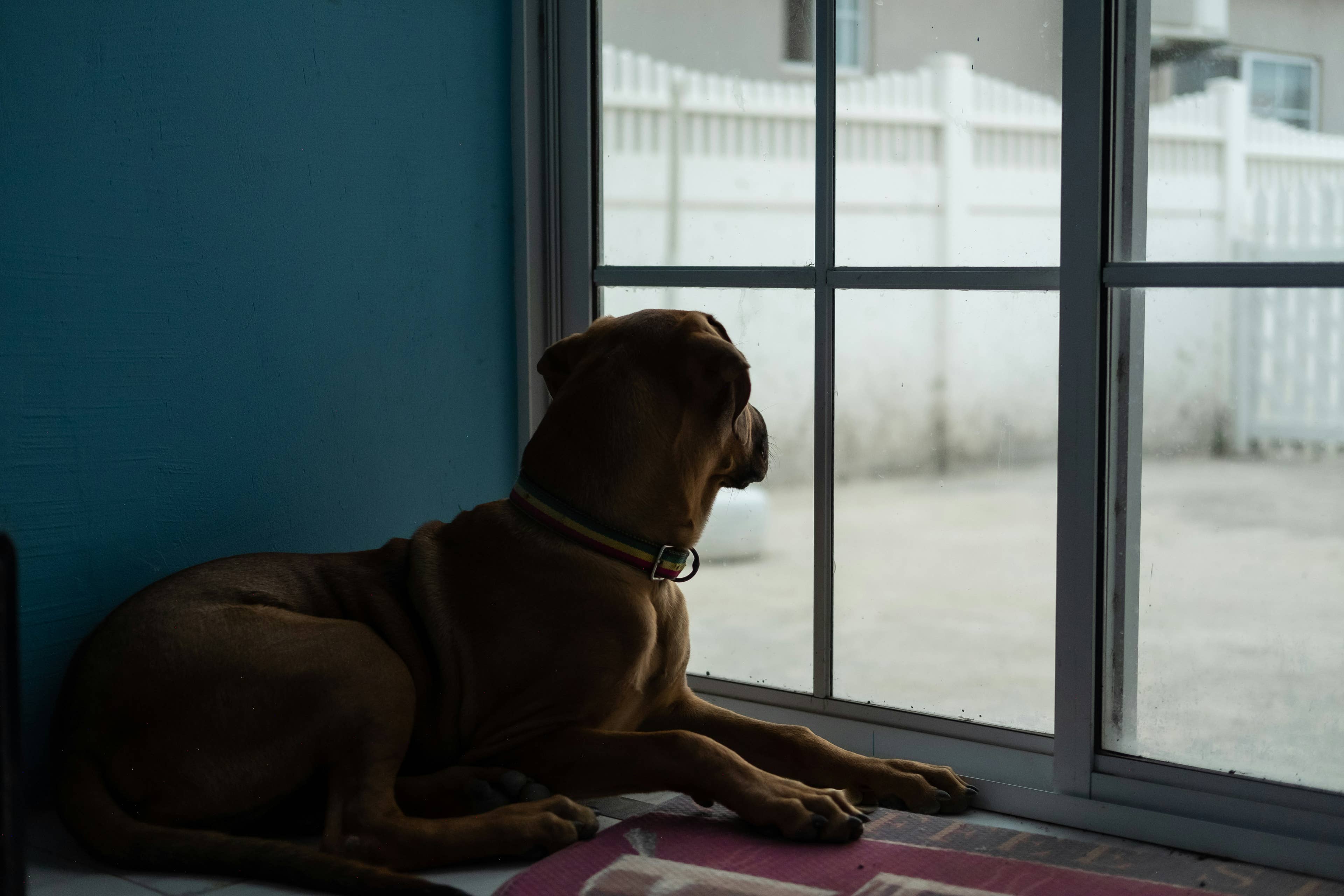
Photo by andrzj brown on Unsplash
If you’re drawn to the Cane Corso’s combination of size, power and quiet watchfulness, the Bullmastiff may be the closest functional match. These dogs are typically 24 to 27 inches tall and between 100 to 130 pounds.
“Bullmastiffs are probably the closest matches to Cane Corsos,” says Dr. Erin Smythe-Morey, a veterinarian and the medical director at the Pet Emergency and Specialty Center of Marin (PESCM). “They have broad heads, muscular bodies and short coats. They were both bred for guarding and are known to be very loyal to their people.”
The Cane Corso’s guarding instincts were shaped over centuries of Italian farm selection. The Bullmastiff, by contrast, was a deliberate 19th-century creation.
Dr. Hennet says that the Bullmastiff was “developed in England by crossing the English mastiff for size and strength with the Old English bulldog for agility, tenacity and speed.” The result was a silent guardian nicknamed the Gamekeeper’s Night Dog, bred specifically to catch poachers on country estates.
These dogs are generally calmer and less active than Cane Corsos. They’re not built for jogging or long hikes, and the breed’s slightly flattened muzzle (inherited from the bulldog side) makes them more prone to overheating during exercise.
3. Rottweiler
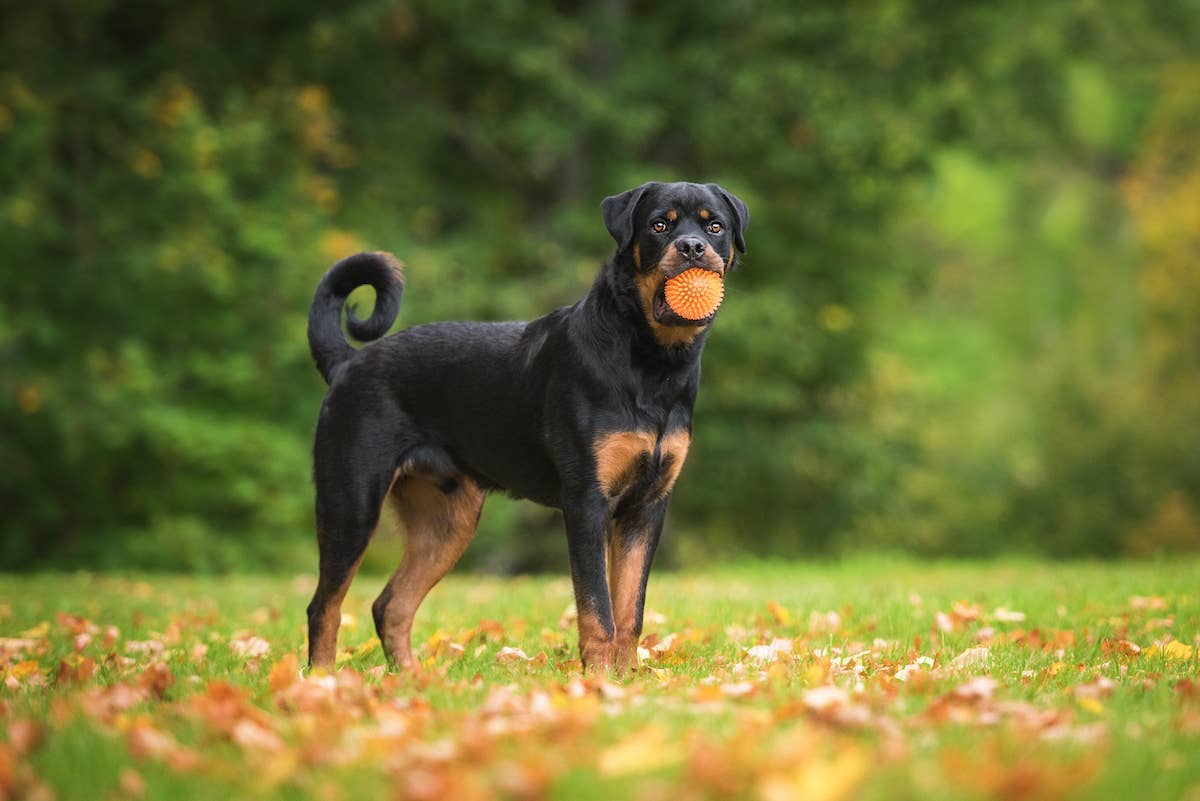
Image via Shutterstock/Rita_Kochmarjova
The resemblance between Rottweilers and Cane Corsos is less about looks and more about behavior. They carry themselves the same way: alert, confident and solidly built. These muscular dogs can typically be 22 to 27 inches tall and weigh 80 to 135 pounds.
The Rottweiler is not a mastiff-type breed, but it shares a lot of personality traits with the Cane Corso. Like the others, it belongs in the AKC working group of dogs. The difference is that Rottweilers have a history in herding, not estate guarding.
The breed’s ancestors accompanied Roman legions as cattle dogs. After the empire collapsed, those dogs settled in the German market town of Rottweil, where they spent centuries driving cattle for local butchers and pulling carts of butchered meat to market. Their German name, Rottweiler Metzgerhund, translates to “Butcher’s Dog of Rottweil,” according to the AKC.
That working relationship with people, which went on for hundreds of years, is part of why Rottweilers tend to be more socially engaged and handler-oriented than some of the more independent mastiff types.
Related: Precious Cane Corso Cries Like a Human While Watching ‘Lion King’ with His Parents
“Rottweilers and Cane Corsos are both muscular, working breeds with strong guarding instincts and a reputation for strength, intelligence and loyalty,” says Dr. Lizzie Youens, BVSc, MRCVS, of ServiceDogCertifications.org. “Both can make excellent companions in the right home, but their size and confidence mean owners need to invest highly in training and socialization.”
Plan on at least two hours of exercise a day for these dogs. Rottweilers do well with structured work like obedience and scent tracking. Leave a Rottweiler with nothing to do, and it will find a project on its own—potentially one you may not want done.
On the health side, Rottweilers carry the highest rate of osteosarcoma (bone cancer) of any breed. Hip and elbow dysplasia are common, and the breed is also prone to subaortic stenosis, a heart condition.
4. Dogue de Bordeaux
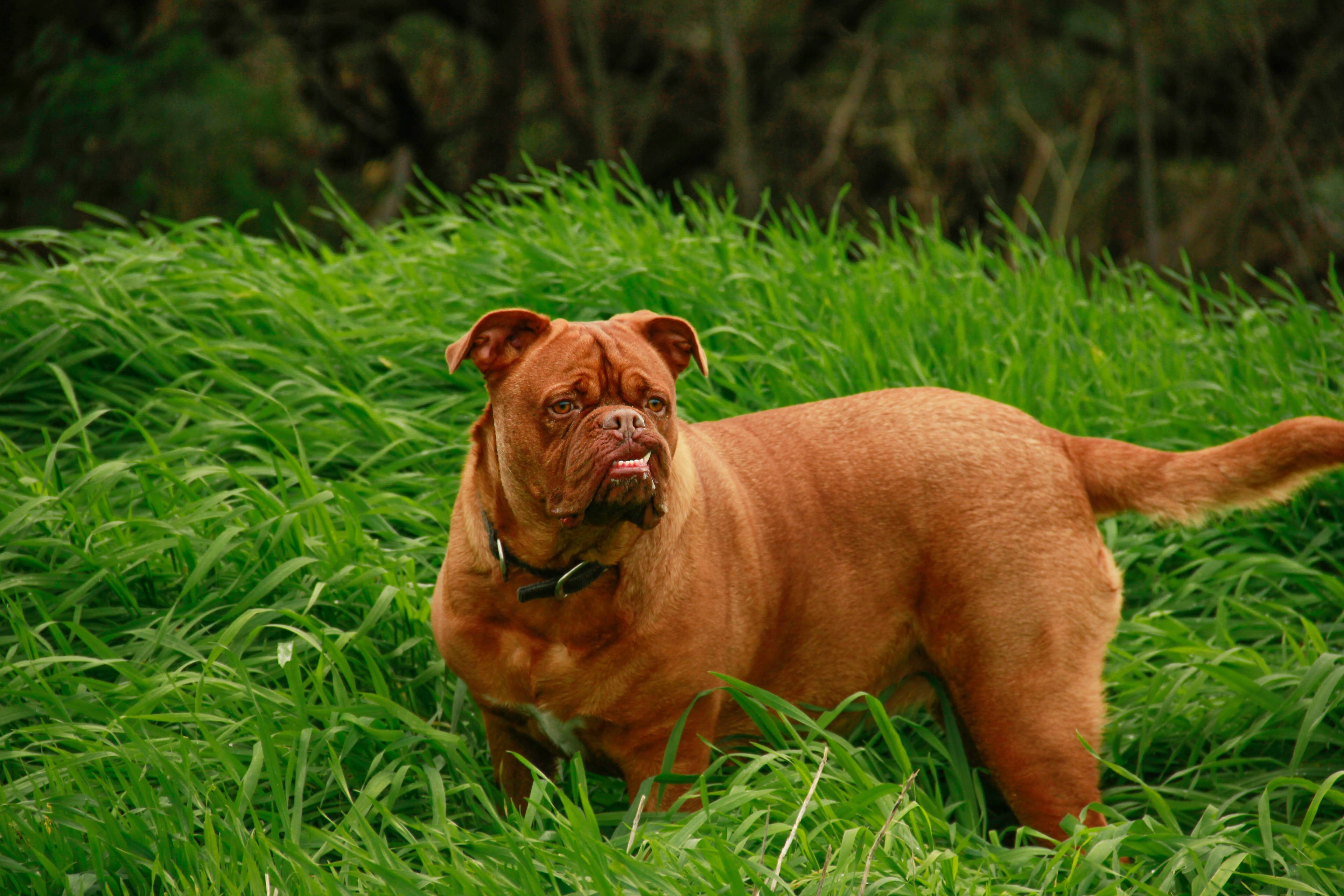
Photo by Amit Lahav on Unsplash
France’s answer to the Cane Corso filled the exact same working role on the other side of the Alps. Most people outside France first encountered the breed in the 1989 Tom Hanks film “Turner and Hooch,” but the Dogue de Bordeaux has a history stretching back at least 600 years in its home country.
The AKC considers it the most ancient of the French dog breeds, with ancestors possibly arriving in Gaul with Roman legions in the first century BC.
“The Dogue de Bordeaux has the exact same historical functional niche in France that the Cane Corso filled in Italy: guarding estates, driving cattle and hunting dangerous game,” Dr. Hennet says.
The difference is in the looks. Physically, this breed is stockier, with a distinctive reddish coat and what Dr. Hennet describes as the largest head-to-body ratio of any dog. The Dogue de Bordeaux is usually 23 to 27 inches tall and 110 to 140 pounds.
At home, the breed is calmer than its face suggests. Dr. Liza Cahn, a veterinarian at Embrace Pet Insurance, notes that Dogues de Bordeaux share the typical mastiff vulnerabilities: hip and elbow dysplasia and bloat.
But the real number to pay attention to is lifespan. The Dogue de Bordeaux may live just 5 to 8 years on average, the shortest of any AKC-recognized breed. (For comparison, a Cane Corso may live 9 to 12 years.) Part of that shorter lifespan may be due to its sheer size, and part of it is the flat face: as a brachycephalic breed, the Dogue has a harder time breathing efficiently and regulating body temperature than a longer-muzzled dog like the Cane Corso. In addition, heart disease and cancer rates are high in this breed too.
5. Dogo Argentino
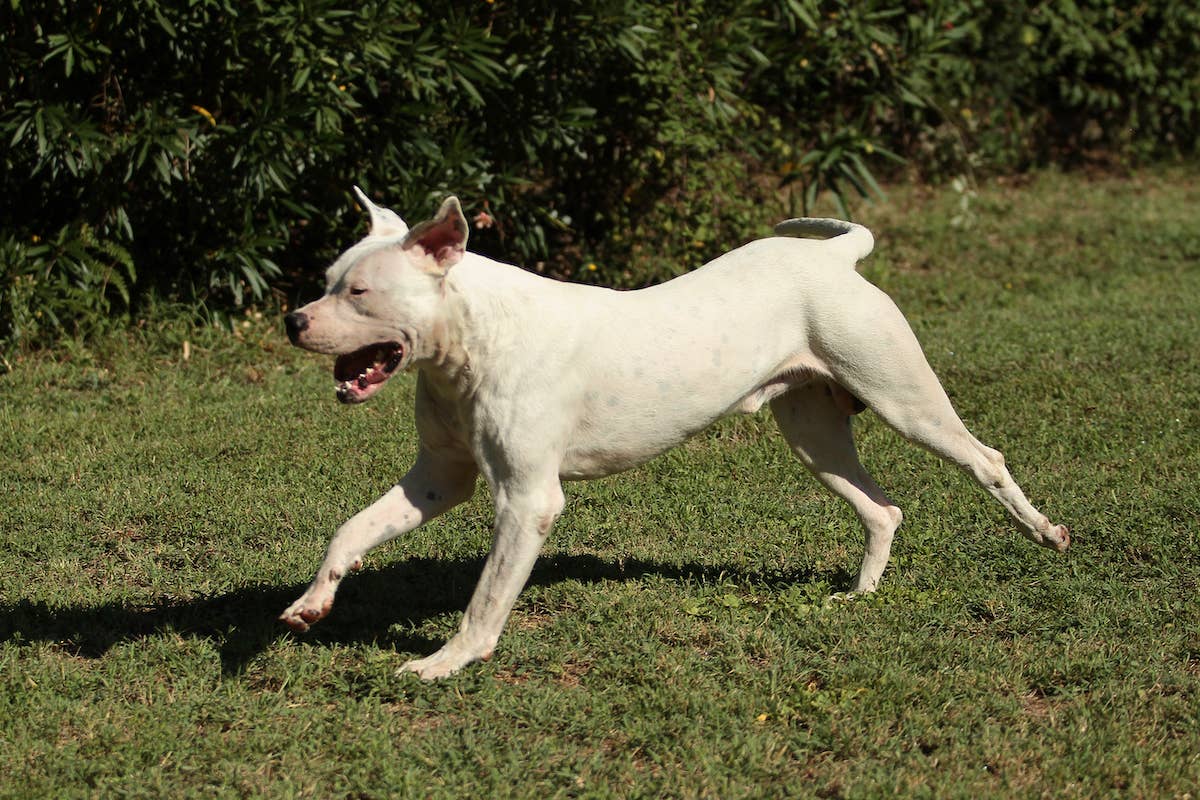
Image via Shutterstock/Ricantimages
Stand a Dogo Argentino next to a Cane Corso, and the athleticism and size are similar (they’re typically 24 to 27 inches and 88 to 100 pounds), but the purpose behind each breed is not. The Cane Corso was a guardian. The Dogo Argentino was a hunter.
According to the AKC, Dr. Antonio Nores Martinez created the breed in the 1920s in Cordoba, Argentina. He was after a dog that could track and pin wild boar and puma across rough terrain in packs.
Dr. Cahn notes that the Dogo Argentino was developed primarily for big-game hunting, and that it typically has a stronger prey drive and a predominantly white coat with a long tail.
That hunting origin means Dogos need more exercise, structured activity and careful management around other animals. They excel in dog sports like agility, obedience and weight-pulling.
Dr. Youens adds that this difference in purpose matters for owners, saying, “Anyone considering either breed should be prepared to provide consistent training, enrichment and appropriate outlets for their strength and energy.”
One other consideration: The Dogo Argentino is banned or restricted in several countries, including Australia and the United Kingdom, due to its fighting-dog ancestry. In the United States, some cities and housing complexes have breed-specific restrictions that include it, so keep that in mind if you’re curious about this breed for your own home.
Final Takeaways
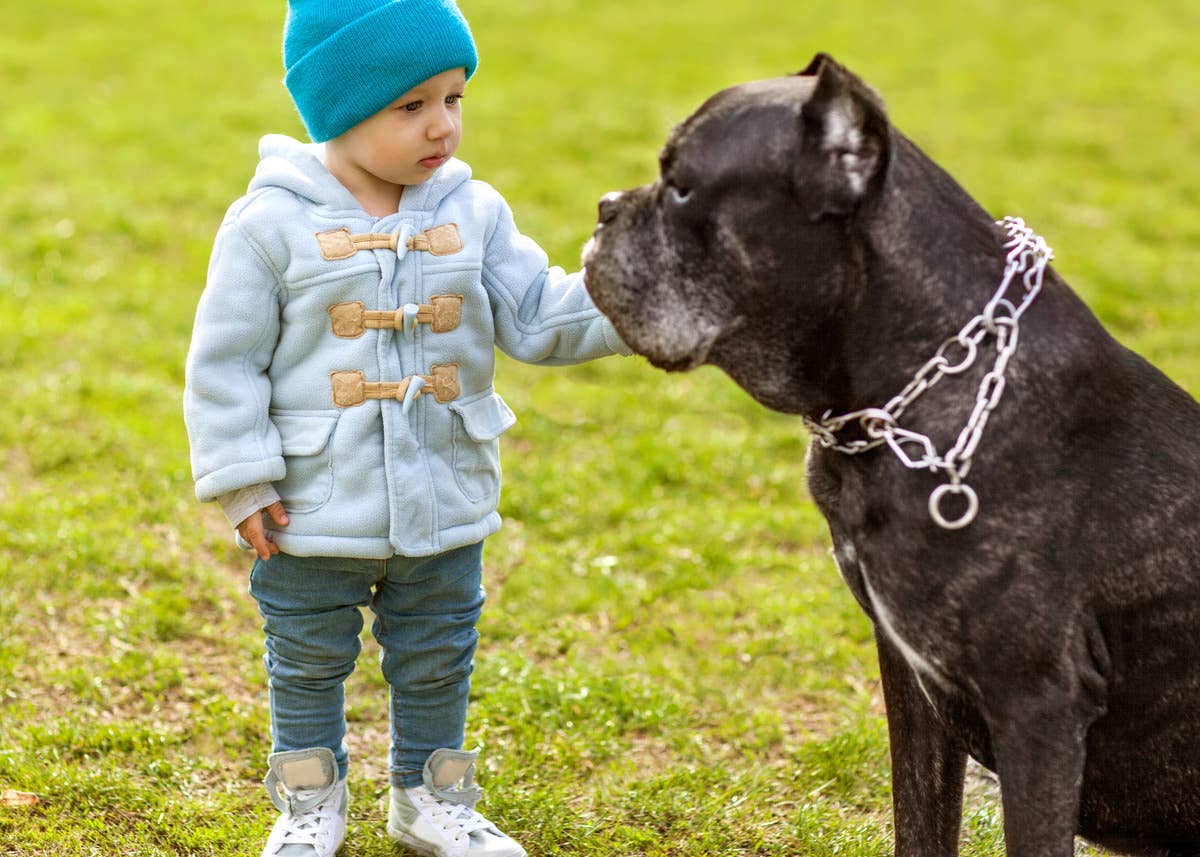
Image via Shutterstock/Rock and Wasp
All five breeds on this list share similarities to the Cane Corso, but they differ meaningfully in energy level, lifespan, health profile and temperament.
Dr. Smythe-Morey says that responsible ownership for these dogs is “key in ensuring all breeds thrive, despite their relative nuances and quirks.” That means early socialization, consistent training and an honest assessment of whether your home can support a large and powerful dog like the ones on this list.
Sources:
Dr. Margo Hennet, DVM, is the senior veterinary genetics manager at Wisdom Panel.
Leah Callaghan, RVN, is a registered vet nurse at Butternut Box.
Dr. Erin Smythe-Morey, DVM, is the medical director at the Pet Emergency and Specialty Center of Marin (PESCM).
Dr. Liza Cahn, DVM, is a veterinarian with Embrace Pet Insurance.
Dr. Lizzie Youens, BSc (Hons), BVSc, MRes, MRCVS, is with ServiceDogCertifications.org.
Dr. Feargus McConnell is a Colorado-based veterinarian.
Related: 5 Things a Dog Is Trying to Tell You When They Put a Paw on You, According to Experts
This story was originally published by PetHelpful on Oct 30, 2026, where it first appeared in the Dogs section. Add PetHelpful as a Preferred Source by clicking here.
Source: Nature



0 Comments